
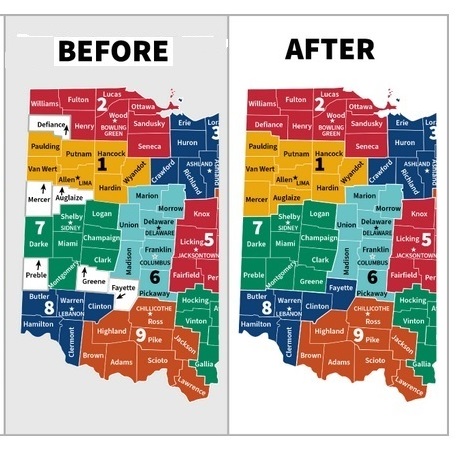
(6-13-26) The Ohio Department of Transportation (ODOT) is transitioning its district boundaries to streamline operations, marking its first major map change in 40 years. The realignment moved six western Ohio counties to neighboring districts to improve geographical coordination, balance workloads, and consolidate maintenance.
Why is ODOT doing this?
There are three main reasons:
- More efficient regional operations Some counties with geographic similarities are currently split between different districts. This can make maintenance work, planning, and coordination harder than it needs to be. For example, the Dayton region is split between districts 7 & 8 today. With this change, those counties will be in the same district, making it easier to plan and work together.
- Better coordination with local partners ODOT works closely with regional planning organizations, economic development partners, schools, and the media. Many of these groups cover multiple counties and districts. The new district boundaries better line up those organizations within our districts, which helps communication and coordination.
- Better balance of work across districts Some districts handle much heavier workloads than others based on their urban, suburban or rural nature. While this change won’t make everything perfectly even, it does help spread the workload more equally by shifting territory from districts with a higher workload to those with more capacity.
Key Transition Details
- Mercer & Auglaize Counties: Moved to District 1 (headquartered in Lima).
- Defiance County: Moved to District 2 (headquartered in Bowling Green).
- Greene & Preble Counties: Moved to District 7 (headquartered in Sidney).
- Fayette County: Moved to District 8 (headquartered in Lebanon).
Transition Timeline and Logistics
- Official Shift: The transition took effect the week of April 5, 2026.
- Budget Planning: FY27 operating budgets and work plans were adapted to reflect the new district jurisdictions.
- Active Projects: To avoid confusion and delays, active projects already in development or construction will largely remain under their original district’s oversight until completion.
- Long-Term Capital: The full transfer of long-term capital programs will phase in over a few years
For more details on the transition plan or regional work plans, view the official ODOT Districts Realignment bulletin or explore statewide projects on the Ohio Department of Transportation homepage.

