
Podcast: WOWO Radio’s Kayla Blakeslee on Logansport, Indiana situation
(9-19-24) While at least three Ohio communities are dealing with an influx of Haitian immigrants, one Indiana community…Logansport, is now the focus of the same circumstance.
Population in Logansport as of the last census is just over 18,000…according to statements made the population has increased by 30% since 2021…roughly 5,400.
Pharos-Tribune story – Local frustration grows over false information about immigrant community

Mayor Chris Martin statement at Board of Works Meeting –
“The rumors recently spread through social media are disappointing. It’s disappointing that we must address the rumors due to the belief of a social media ‘satire’ page. This is slowing down local government from solving concerns and challenges.”
“The circumstances are being misrepresented and we are gathering data, talking with community leaders, state officials and are in contact with the governor’s office,”
“We are a diverse community and have been for a very long time. Our community is aware of a large number of immigrants. I’m asking that citizens please refrain from false statements, especially those that threaten the lives of others.”
Logansport Police Chief Travis Yike
“We will continue to treat the residents of our community with dignity and respect on or off duty. We do not use stereotypes, racial profiling or discrimination to do our jobs. Our officers will continue to do their jobs with integrity and professionalism.”
Zach Szmara, of The Bridge, from a Facebook posting this week-
It’s a bit unusual to introduce myself to a community I’ve served for over 12 years, but there have been some rumors and untruths circulating, so I want to clarify who I am and what I do here in Logansport.
In the spring of 2012, my family moved to Logansport after serving overseas as missionaries in Africa. I am an ordained Wesleyan pastor, and I was asked to come to Logansport to close a church that had been declining for decades. The expectation was that I would preach a few months and help with the process of shutting it down. That was over 12 years ago, and instead of closing the church and moving on to another community, we’ve experienced something entirely different. Logansport became our home, and that’s largely because of a lunch we had with an immigrant family shortly after arriving.
Though we didn’t speak the same language fluently—my family knew a bit of Portuguese (not quite Spanish, but somewhat close), and they spoke a little English—their children helped translate, and through that meal, we found a sense of belonging and connection and authentic welcome that kept us here. That lunch changed my perspective and my life in a profound way. Even with degrees in intercultural studies and anthropology, and having lived in places like Papua New Guinea and Mozambique, I had never truly shared a table with immigrants in the U.S. That lunch and the relationships that followed shattered many of the myths I had believed. I realized how easy it was to “other” immigrants when you aren’t close to their lives and stories.
As I built friendships with immigrant families here, I kept hearing about one pressing need: access to affordable, high-quality immigration legal services. I assumed that, given the diversity of Logansport, there had to be someone providing these services. I was wrong. Immigrants were getting taken advantage of by untrained and unlicensed individuals, and their cases weren’t progressing as they should. That’s when I learned about a unique program through the Department of Justice (DOJ) that allows non-attorneys, with proper training, to become accredited to practice immigration law if they are attached to a nonprofit organization. Since local churches qualify as nonprofits, I felt uniquely suited to take on this responsibility.
In 2013, I traveled multiple times to Baltimore, Maryland to receive the necessary education and training. By February 2014, our church—The Bridge—was officially recognized by the DOJ as a legal office, and I was accredited as an immigration legal representative. That’s how Immigrant Connection was born (over 10 years ago), with the mission to provide high-quality, low-cost legal services to immigrants in Logansport and the surrounding communities.
Let me be clear about what we do and do not do. We do not sponsor immigrants, transport, or bring them to our city, or provide housing or other services. Instead, we function like a nonprofit law firm, focusing solely on immigration law. Our work helps immigrants maintain lawful status (like renewing work permits so they can keep their jobs and driver’s licenses), reunite families (helping U.S. citizens bring their spouses, children, or parents from abroad), and navigate the complex steps toward becoming naturalized U.S. citizens. Every single thing we do is following current federal law, under the oversight of the DOJ.
We’ve done this for 10 years, across multiple administrations—Republican and Democratic—and we remain focused on following immigration law and policies. Sometimes there are new lawful immigration pathways we can help individuals navigate. For example, when DACA (Deferred Action for Childhood Arrivals) was first introduced, we helped hundreds of local students, who had grown up here, apply for DACA status. Today, those individuals are contributing to our community—working, owning homes, and raising families.
Another point of confusion is around our funding. I want to set the record straight: our local office has never received federal, state, or local funding. Most of our community’s other non-profits receive state and/or federal funding and/or local grants from the Community Foundation or United Way – Immigrant Connection at The Bridge has not received funding from these sources. We’re funded by the immigrants we serve, who pay low-cost fees—about 10% of what an attorney would charge. And we never turn anyone away because of their inability to pay. In fact, we do a significant amount of pro bono work each year. In all, from our free services and low-cost services, we’ve saved families in our community millions of dollars in legal fees – and, to date, the office in Logansport has served over 5,000+ unique families throughout Indiana.
Some of the confusion might stem from the fact that Immigrant Connection has expanded far beyond Logansport. After seeing the widespread need for affordable immigration legal services across the country, I founded a national nonprofit under the same name—Immigrant Connection. This national organization has now helped establish 43 Immigrant Connection offices across 25 states, all recognized by the Department of Justice. And almost every single legal rep at those other offices had to travel to Logansport to learn and gain experience from our local office. Each office across the country provides the same high-quality, low-cost immigration legal services that we began here in Logansport – nationally Immigrant Connection has provided immigration legal services to over 38,000 immigrant families.
Recently, the national nonprofit received a grant from USCIS to develop a new citizenship preparation curriculum. It’s important to clarify that this grant is not connected to our local office in Logansport, nor does it relate to newcomer immigrants. Instead, this funding is specifically to create educational materials that will be used nationwide to help lawful permanent residents (green card holders) prepare for the final step in the immigration process—becoming U.S. citizens. This is yet another way Immigrant Connection is helping immigrants across the country navigate complex immigration pathways.
Now, I also want to address a specific concern that’s been circulating—rumors about the Haitian community in Logansport. We lament the stories and misinformation being spread. Almost all Haitians in our community have been granted Temporary Protected Status (TPS), which is a lawful immigration status. This means they are not undocumented, nor are they doing anything illegal. They have lawful status, work authorization, and the ability to obtain driver’s licenses legally. Anyone suggesting otherwise simply doesn’t understand immigration policies and pathways.
The Department of Homeland Security has extended through Aug. 3, 2025, the validity of certain Employment Authorization Documents (EADs) issued to Temporary Protected Status (TPS) beneficiaries under the designation of Haiti.
If you are currently a TPS beneficiary under the Haiti designation and you have not yet re-registered for TPS under the most recent extension, you must submit Form I-821, Application for Temporary Protected Status, by Aug. 30, 2024, to keep your TPS benefits.
It is important to timely re-register during the re-registration period and not to wait until your EAD expires. Delaying re-registration could result in gaps in your employment authorization documentation. For additional information, please see the Federal Register notice.
I’ve lived overseas and experienced firsthand the tension points when different cultures collide. It’s not always easy, but it’s possible to move beyond cultural dissonance with a posture of listening and learning. For those who are concerned or think the answers are simple—like “just do it this way” or “get rid of them”—I’d encourage you to reconsider. The truth is, things look straightforward when you’re distant, but until you become proximate and build real, authentic relationships with our newcomer families, you won’t understand the complexities nor any actual next steps forward.
So, if you really want to do something, I’d encourage you to reach out, connect, build relationships, and provide welcome. That’s what our community truly needs right now.
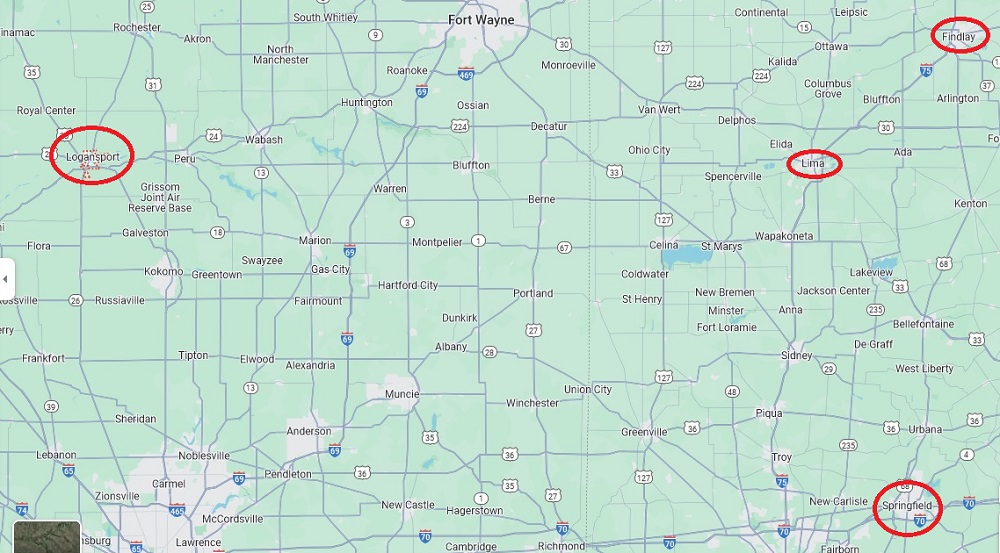
The current situation…
Communities in RED are facing an influx of Haitian immigrants.
It is a short drive from community to community, Logansport is straight west of Lima, Ohio…139 miles and just a little over a two-hour drive.
RELATED:
- Ohio BMV Helping Haitian Immigrants To Obtain Drivers License
- DeWine Sends Ohio State Highway Patrol To Add Security In Springfield City School District
- EDITORIAL: The Springfield, Ohio Quiz
- Mayor Of Findlay Updates Community On Immigrant Population
- Lima Mayor Addresses Haitian Refugee Issues
 Mercer County Outlook
Are you trying to start trouble for Logansport with this story ?
LikeLike
sounds like your mayor is less than useless — pure Dim
LikeLike