
Editorial by the Outlook’s Dave Schmidt

(3-12-26) A recently approved new firehouse in Celina has raised the eyebrows of some local residents.
The approval process of Celina City Council of the new project came out of the blue and contradicted what had been the plan to use the current site.
- EDITORIAL: Time To Answer Questions On The New Celina Firehouse Proposal
- Celina City Council Meeting Video Discussing Fire Department Future Plans- 2-23-26
- Celina City Council ‘Back Doors’ Land Purchase
Still today Celina voters have no idea of what the change will cost them in the future. How the project will be financed. Why the change in location.
What did the $70,000 June,2025 feasibility study on the firehouse say about locating to a new site. Why did it take until February to change direction on the site?
You Can’t Handle The Truth
When was the decision actually decided by council…why did Mercer Health do a quick 360 on their project and sell the Orchard Tree land to the City? Murmurs of the relationship between the City and Mercer Health have been heard in the community based on this transaction.
Let’s face it this is a possible ‘60 Minutes’ episode candidate.
The situation reminds many of us ‘old timers’ of another project called the Blue Goose. Which seems that many may have forgotten.
So move over BLUE GOOSE…now we face a situation much like that – THE RED GOOSE
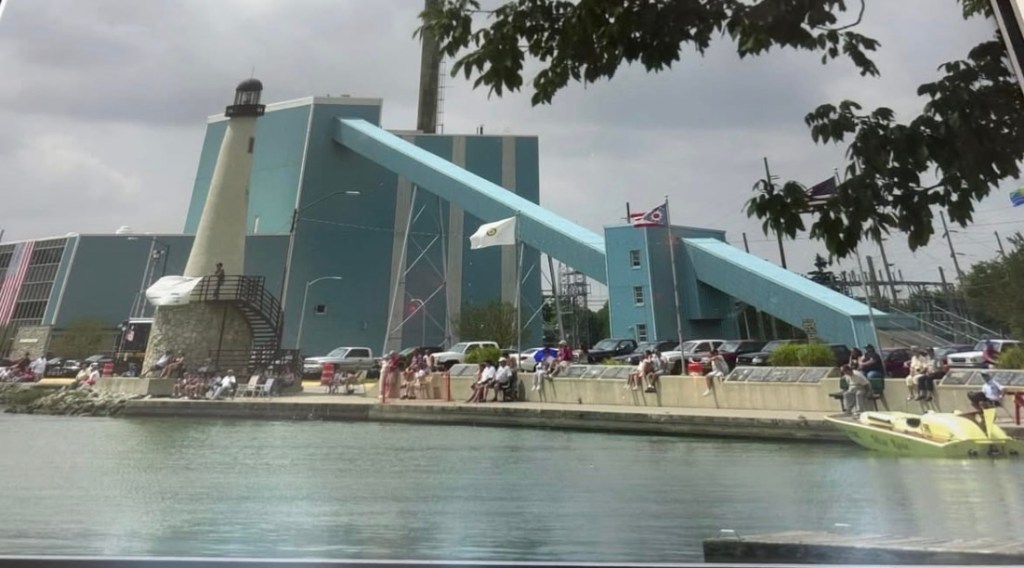
Portions from AI—
Celina owned its own electric system and in the past had previous plants that worked, including the one next door to the Blue Goose that was operational at the time…it was to be used to cover peak times. It was said that it was not properly maintained and when the Blue Goose was operating and it quickly was shut-down.
But by the 1960s:
The city bought most of its electricity from outside utilities, including DP&L. Demand for power was rapidly increasing due to new homes, appliances, and industry.
City officials worried that relying on outside suppliers could become expensive and unreliable.
The national energy climate of the 1960s
Across the United States during the 1950s–60s:
Electricity demand was growing extremely fast. Utilities warned about future shortages. Fuel prices and wholesale power costs were uncertain.
Small municipal utilities like Celina believed building their own generators would:
- Guarantee power supply
- Stabilize rates
- Reduce dependence on large utilities
Decision to build a local generating plant
Celina leaders approved construction of a diesel-powered electric generating plant near Grand Lake St. Marys. Years later it was discovered that the facility was not properly equipped with the right equipment and was followed up by investigations and lawsuits that proved that.
Goals of the project:
- Produce a large portion of the city’s electricity locally
- Use outside power only during peak demand
- Keep electricity rates competitive
4. Why the plan didn’t work
The idea sounded good, but the plant ran into major technical and economic problems almost immediately:
- Mechanical problems
- Equipment failures
- Reliability issues
- High maintenance costs
- Economic problems
- Diesel fuel became very expensive Wholesale electricity became cheaper than generating locally
- Within only a few years, the plant became too costly to operate.
Closure
By 1973, just a few years after its opening, in 1969….Celina shut down the plant operation.
The building remained standing for years as a vacant industrial structure along the lake until it was demolished in 2006.
Basic Facts
Why the plant failed
The facility had major operational problems from the start:
- It never produced enough electricity to reliably power the city.
- Maintenance and operating issues made it inefficient.
- Because of the problems, Celina shut it down permanently by the spring of 1973.
Demolition
Asbestos removal and demolition began in 2006. The city allowed a demolition company to remove it and salvage scrap metal.
From the outset, the plant faced significant operational and technical issues. It was plagued by problems and never generated sufficient power to meet the city’s needs reliably. As a result, it underperformed expectations and proved uneconomical.
Earlier Celina power infrastructure existed (e.g., an electric light plant from around 1899 tied to street lights), but the Blue Goose was a distinct, later municipal coal-fired attempt that failed quickly.
A quick look at the BLUE GOOSE
How did the Blue Goose affect Celina’s economy?
The municipal power plant known as the “Blue Goose” in Celina, Ohio cost local taxpayers about $3–4 million to build in the late 1960s (roughly $25–35 million in today’s dollars when adjusted for inflation).
Built: 1969 Estimated construction cost: around $3–4 million Equipment included: 12,500-kilowatt turbine generator 20,000-kilowatt unit that was never used
While exact figures vary by source, the project was widely viewed locally as a multi-million-dollar municipal investment that never paid off.
Construction cost
Why it became a financial loss
Several problems quickly made the plant uneconomical:
Mechanical failures Equipment problems prevented it from producing the expected amount of electricity.
Unused equipment…One of the major generating units installed was never put into service.
Fuel costs…The plant relied on fuel that became more expensive than buying wholesale power.
Very short lifespan
Began producing electricity around 1970. Shut down permanently in spring 1973 after only a few years of operation.
Because of that short life, the plant became known locally as one of the most expensive public projects in Celina’s history that failed to deliver its intended benefit.
After it closed
The building sat unused for over 30 years on the lakefront. It was finally demolished in 2006, and the demolition contractor paid the city about $26,000 for scrap rights.
Public anger and accusations
After the shutdown, many residents and political opponents demanded answers.
Key accusations included:
- Poor planning and oversight by city officials
- Unrealistic projections about how much power the plant could produce
- Claims that the city should have continued buying electricity instead of generating its own
- Critics argued taxpayers were stuck paying for a “white elephant” project.
03-04-04: The Blue Goose may ‘fly’ out of Celina
 Mercer County Outlook
you want some cheese with your whine Dave or some fresh onions for your tears ??? Cry a little more they didn’t get YOUR approval first Mr Mayor. The building is 134 years old get over it.
LikeLike