
(1-19-26) President Donald Trump has sent a letter to Norway’s Prime Minister Jonas Gahr Stoere.
The letter in full reads:
“Dear Jonas: Considering your Country decided not to give me the Nobel Peace Prize for having stopped 8 Wars PLUS, I no longer feel an obligation to think purely of Peace, although it will always be predominant, but can now think about what is good and proper for the United States of America.
“Denmark cannot protect that land from Russia or China, and why do they have a ‘right of ownership’ anyway? There are no written documents, it’s only that a boat landed there hundreds of years ago, but we had boats landing there, also.
“I have done more for NATO than any other person since its founding, and now, NATO should do something for the United States. The World is not secure unless we have Complete and Total Control of Greenland.
Thank you! President DJT”
POLITICS: Trump’s Effort To Purchase Greenland
Here’s a comparison of Greenland’s population with the populations of major Ohio cities:
Greenland’s Population (2024–2025)
Greenland has a total population of about 56,699 people as of early 2024. Its largest town, Nuuk, has around 19,872 people—about one-third of Greenland’s population.
Ohio Cities Compared to Greenland
Here are approximate population figures for some of the largest Ohio cities (2025–2026 estimates):
Ohio City///Population (approx. 2025–26) ///Comparison to Greenland
Columbus 946,661 – 16.7× bigger than all of Greenland
Cleveland 362,142 – 6.4× bigger than all of Greenland
Cincinnati 317,570 – 5.6× larger
Toledo 263,314 – 4.6× larger
Akron 189,423 – 3.3× larger
Dayton 135,742 – 2.4× larger
Parma 78,544 – 1.4× larger
Canton 68,511 – 1.2× larger
Youngstown 58,740 – roughly same as Greenland
Springfield 57,912 – roughly same as Greenland
Key insights
Greenland’s entire population (~56–57 k) is smaller than almost every major Ohio city — even smaller than mid-sized cities like Youngstown and Springfield. Only a few Ohio cities (e.g., very small Ohio villages) have populations below Greenland’s total. Greenland’s largest settlement, Nuuk (~19,872), is similar in size to small Ohio cities or villages (e.g., around Ashtabula (~17–18 k)).
Summary: Greenland’s total population is tiny compared to the big cities in Ohio, roughly equivalent to a mid-sized Ohio city, and much smaller than a major metro city like Columbus.
Grok AI supplied
Why is Greenland important to America?
Greenland is important to America primarily due to its unique strategic location in the Arctic, combined with growing military, geopolitical, and economic significance—especially as climate change opens up the region.
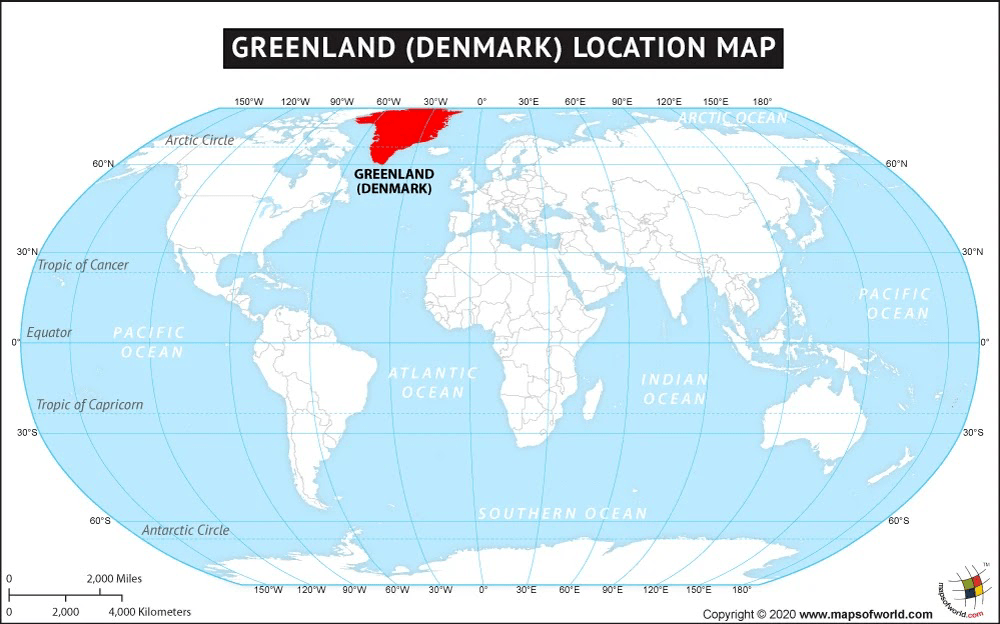
Here are the key maps showing Greenland’s position relative to North America, Europe, and the Arctic (note how large it truly appears when not distorted by common map projections):
1. Military and Defense Importance
Greenland sits between North America, Europe, and Russia, making it a critical vantage point for monitoring threats across the Arctic and North Atlantic.
The U.S. has operated Pituffik Space Base (formerly Thule Air Base) in northwest Greenland since the Cold War under a defense agreement with Denmark. This is the northernmost U.S. military installation and plays a key role in:
• Ballistic missile early warning
• Space surveillance
• Monitoring Russian (and increasingly Chinese) activity in the Arctic
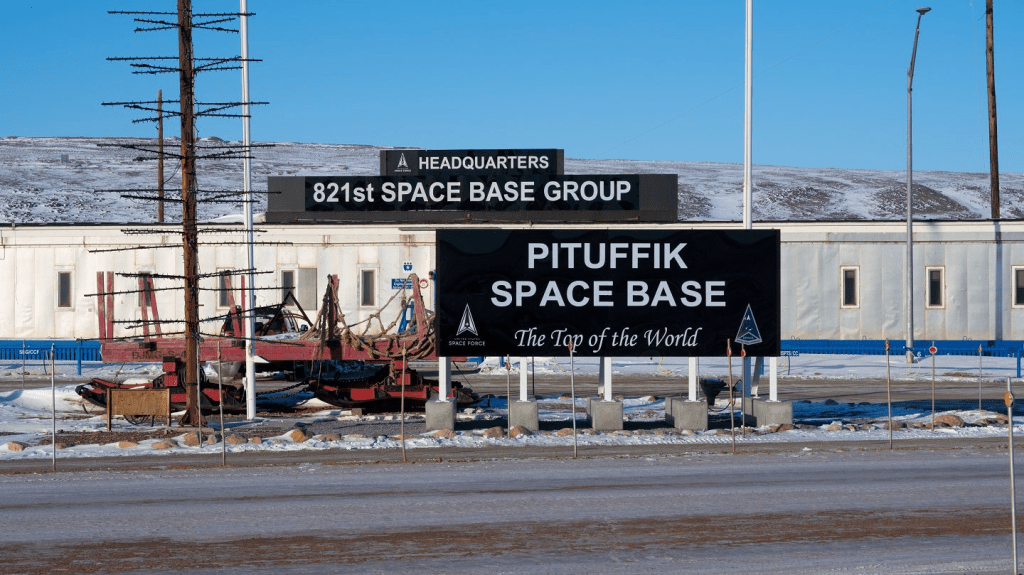
This location is part of the historic GIUK Gap (Greenland-Iceland-UK) chokepoint, vital for controlling naval and air movements between the Arctic and Atlantic.
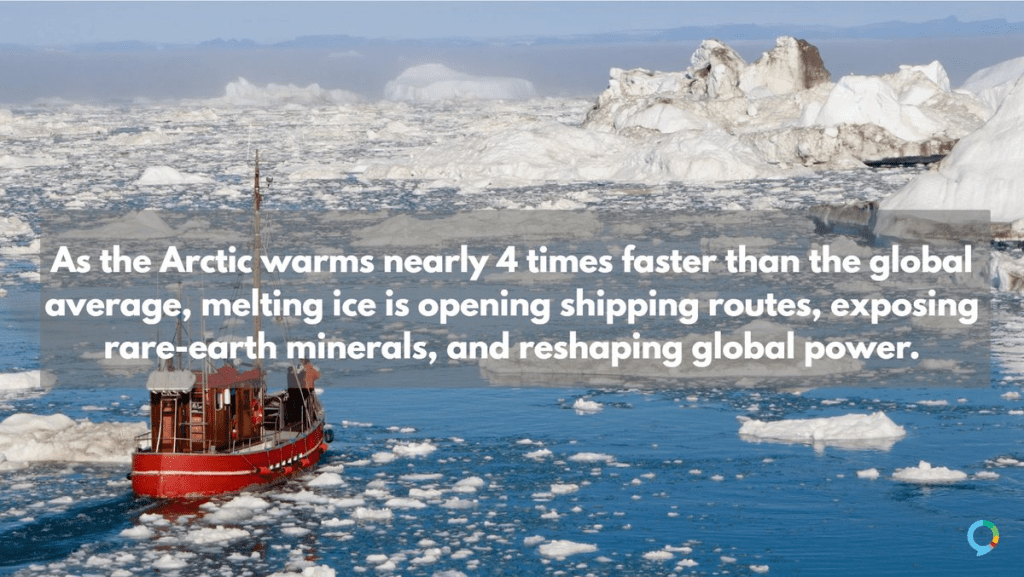
As the Arctic warms rapidly (nearly 4x faster than the global average), new shipping routes (like the Northwest Passage) and military opportunities emerge, heightening competition with Russia and China. Melting ice makes these routes more accessible:
2. Economic and Resource Importance
Greenland holds vast untapped deposits of rare earth elements and other critical minerals (e.g., lithium, uranium, zinc) essential for modern tech, electric vehicles, wind turbines, and military equipment.
These resources are especially valuable as the U.S. seeks to reduce dependence on China, which dominates global rare earth production and processing.
While extraction is challenging due to harsh conditions, lack of infrastructure, and environmental concerns, interest has surged in recent years.
3. Current Geopolitical Context (as of 2026)
U.S. interest dates back decades (including failed purchase attempts in the 1940s–1960s), but it has intensified under recent administrations. President Trump has repeatedly emphasized Greenland’s value for national security, Arctic deterrence, and resources—reviving discussions about acquisition (though Greenland and Denmark strongly oppose this, viewing it as disrespectful).
The U.S. already has secure military access via existing agreements, and experts argue cooperation (rather than coercion) best serves American interests while respecting Greenland’s autonomy and Inuit population.
In short, Greenland isn’t just a remote icy island—it’s a geostrategic linchpin for U.S. defense in a warming, contested Arctic world. Its importance has only grown in the 21st century.
 Mercer County Outlook
The “Art of the Deal” guy showing us his petulance while undermining our world friendships. Denmark hasn’t refused to allow a greater military presents in Greenlland. They haven’t denied our access to “rare minerals” that may or may not be present in Greenland. We can have that pretty much for the asking at no cost to us. I thought geeting what you want for free is the best deal one could make.
I also think it intriguing that “climate change” (I thought that was a hoax) is being cited a concern that shipping lanes are opening up enabling our adversaries easiler access to the US.
To me the economic and military risks with our allies are much more concerning than any rewards that come from owning Greenland.
LikeLike
UPDATE: Report in the NY Post (a Trump friendly newspaper) regarding the 1917 US/Denmark contract (Treaty of Danish West Indies) acknowledging Demark’s claim of Greenland. The US also purchased certain Caribbean Islands. One of those Islands later become Epstien’s Rape Island.
LikeLike
DJT has a “concept on a deal” regarding Greenland. Anybody want to venture a guess as to what it is. My money is that we can place more military in Greenland, we will be able explore for rare earth minerals, and Greenland will tell DJT how wonderful he is.
All this angst for no real return. Doesn’t matter your politics, this Greenland exercise was a waste of taxpayer money and hurt our alliances.
LikeLike