
(9-11-25) Former City of Portland, Indiana employee Brad Clayton has had a second tort filed against his former employers.
A tort is a civil wrong that causes a person to suffer loss or harm, resulting in legal liability for the person who commits the act. The primary goal of tort law is to provide a remedy, typically monetary compensation, to the injured party. This field of law is distinct from both criminal law, which seeks to punish public offenses, and contract law, which governs breaches of agreements.
Damages in tort cases
If a plaintiff successfully proves a tort claim, they can be awarded monetary damages to compensate for their losses.
- Compensatory damages: Designed to make the injured party “whole” again by covering medical bills, lost wages, and pain and suffering.
- Punitive damages: Awarded in cases where the defendant’s conduct was particularly egregious. These damages are intended to punish the wrongdoer and deter similar behavior in the future.
McKinney & Company of Muncie is representing Clayton in the latest tort.
Commercial Review – City faces another tort claim, Clayton has second complaint regarding FMLA information; judge issues order in Phillips suit
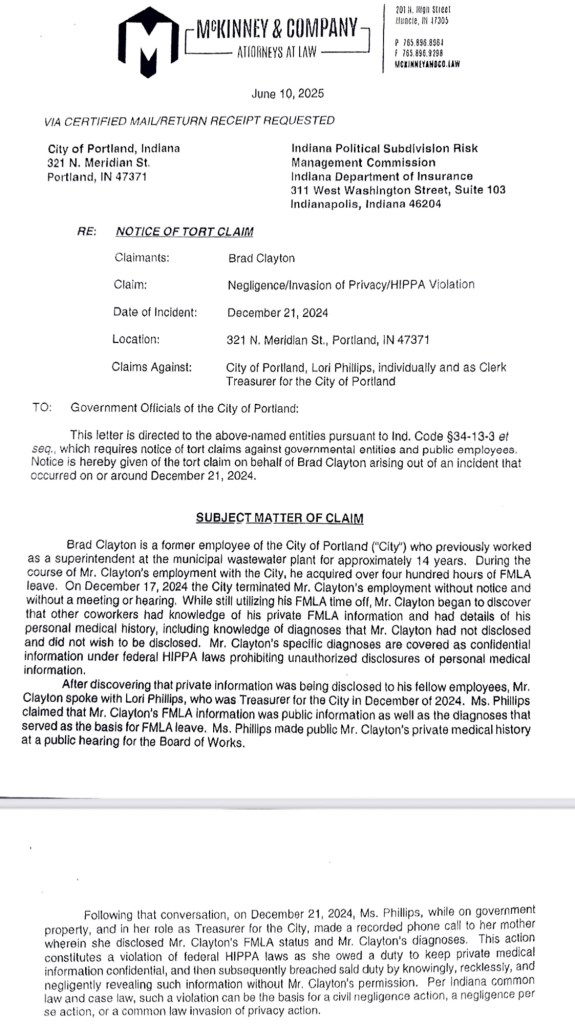

Clayton also had an earlier tort filed against the City in which he alleges that he was berated by wastewater department superintendent Brad Dues and that city representatives, including Mayor Jeff Westlake, spread information about him and his job.
It also says allegations made during the December 17th, 2024, board of works meeting regarding his work, attitude and missed time were untrue and unsubstantiated.
From the Commercial Review on the December 17th meeting—
The board also voted unanimously to terminate Clayton’s employment immediately, with clerk-treasurer Lori Phillips reporting that he has been working for another department while taking time off from Portland. (Board of works members also had a letter from wastewater superintendent Brad Dues.) She noted that such employment is allowed, but only if it does not interfere with work for the city.
Phillips said Clayton has only worked 12 hours in the last four weeks while taking accrued comp time. She added that there have been communication issues between Dues and Clayton, and that his absence has left the wastewater department short-staffed.
Westlake told his fellow board members that he had consulted with city attorney Wes Schemenaur and he agreed there are grounds for termination based on city ordinance and policies.
 Mercer County Outlook