
(3-1-25) Joint Township District Memorial Hospital (JTDMH) has standardized The Hercules Patient Repositioner across all inpatient care areas setting a new benchmark for patient care and caregiver safety. This initiative makes Joint Township one of the first hospitals in Ohio to fully integrate this innovative technology across its entire inpatient care environment. Bringing this advanced technology automates patient boosting—one of the most physically demanding tasks in bedside care—helping to improve nursing retention, enhance patient outcomes, and streamline hospital operation.
Manual patient boosting is a leading cause of nurse fatigue, injury, and burnout, contributing to workforce shortages. Studies show up to 90% of nurses experience low back pain, often leading them to leave bedside care. By eliminating manual repositioning, The Hercules Patient Repositioner reduces cumulative trauma, extends nurses’ careers, and improves retention.
A recent pilot program in JTDMH’s acute care unit confirmed the significant impact of Hercules on staff well-being. A post-pilot staff survey affirmed the organization’s plan to standardize the equipment across all patient care areas, including post-partum and labor and delivery beds. The survey revealed 100% of nursing staff agreed Hercules would extend their career at the bedside, with 94% reporting it was very unlikely they would leave due to the physical demands of the job.
Lana Hinders, Chief Nursing Officer at JTDMH
“This investment reflects our commitment to team member safety and creating a ‘best place to work’ environment.
By removing the physical strain of boosting, we’re giving nurses the support they need to continue delivering exceptional care.”
JTDMH has learned it is the first hospital in Ohio to fully implement this technology in an obstetrical area. Hercules is especially beneficial in labor and delivery and post-cesarean care, where frequent repositioning is necessary. C-section patients often struggle to move comfortably due to abdominal surgery, requiring nurses to manually lift them. Labor and delivery patients also need frequent position changes, especially those with epidurals—which cause numbness from the waist down. The Hercules system supports both patient groups by enabling safe and effortless repositioning, reducing strain on caregivers and improving patient comfort.
Beyond caregiver benefits, Hercules enhances clinical outcomes by reducing the risk of Hospital-Acquired Pressure Injuries (HAPIs). Regular, effortless repositioning minimizes pressure points, improving patient health and comfort. Additionally, its zero-contact design reduces caregiver exposure to infections, enhancing hospital safety.
With caregivers repositioning patients 10+ times per shift, Hercules saves valuable nursing time. A single caregiver can now boost a patient with the push of a button—eliminating delays and allowing staff to focus on higher priority & personalized patient care.
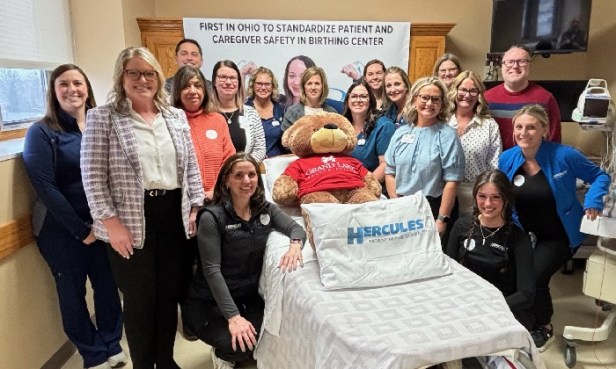
By integrating The Hercules Patient Repositioner, JTDMH is prioritizing patient safety, caregiver well-being, and operational efficiency, redefining excellence in hospital care available in the region. In celebration of this milestone, a ribbon-cutting was held on February 26. This highlights the hospital’s commitment to nurse safety, patient comfort, and maternity care innovation, with leadership and staff in attendance.
Back Safety Reference: https://pubmed.ncbi.nlm.nih.gov/30085608/
 Mercer County Outlook