
(8-10-24) Buckeyes will be able to view the Perseid Meteor Shower this weekend.
According to NASA, you can expect to see an average of up to 100 meteors per hour during the Perseid’s peak.
A typical Perseid meteoroid (which is what they’re called while in space) moves at 133,200 mph (214,365 kph) when it hits Earth’s atmosphere (and then it is called a meteor). Most of the Perseids are tiny, about the size of a sand grain. Almost none of the fragments hit the ground, but if one does, it’s called a meteorite.
The Perseids are hot stuff, reaching temperatures of more than 3,000 degrees Fahrenheit (1,650 Celsius) as each fragment travels through the atmosphere and both compresses and heats the air in front of it. Most of the fragments are visible when they are about 60 miles (97 kilometers) from the ground.
What is the Perseid meteor shower?
When rocks or other debris enter Earth’s atmosphere at a high rate of speed, they often burn up. These fireballs or “shooting stars” are called meteors. The Perseid meteor shower happens every year when the Earth passes through a cloud of debris left behind by the Comet Swift-Tuttle. Perseid meteors tend to leave long “wakes” of light, writes NASA, as they streak across the sky.
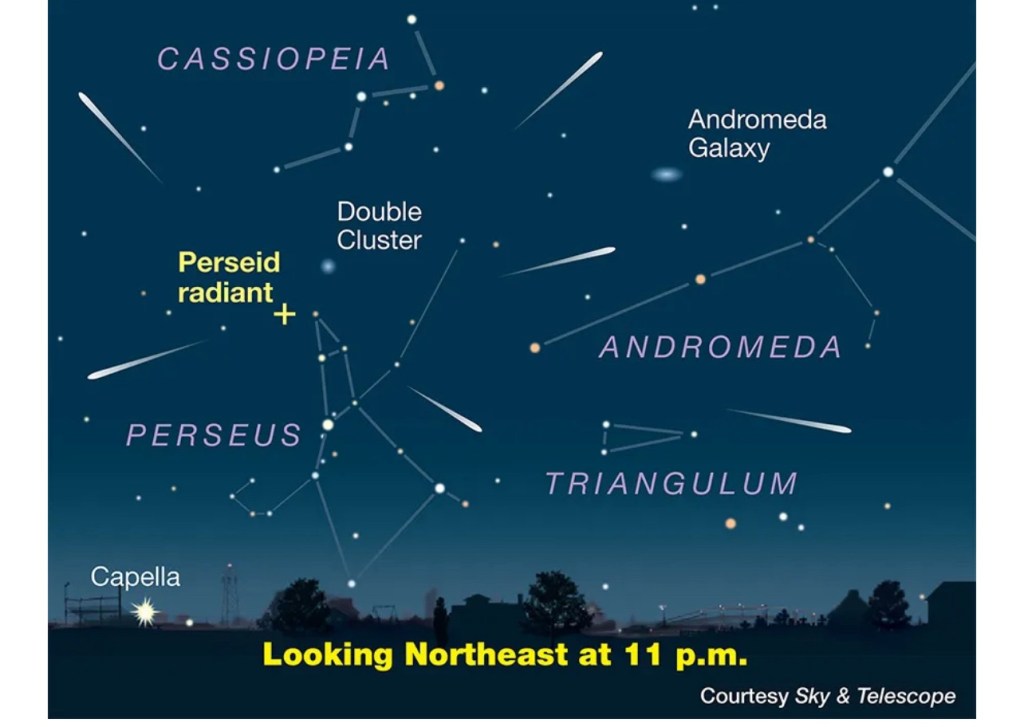
August 11 – The Perseid meteor shower peaks overnight tonight. Provided you have clear skies, viewing conditions will be favorable this year, as the moon sets by around 11:30 p.m. local time. Meteor activity picks up from then until dawn.
You can watch the Perseid meteor shower online for free this weekend courtesy of astrophysicist Gianluca Masi of the Virtual Telescope Project. The first livestream will begin at 9 p.m. EDT on Aug. 11th and the second will begin at 9 p.m. EDT on Aug. 12th weather permitting.
 Mercer County Outlook